Forms: Whole, Rhythm, Hierarchy, Network by Caroline Levine
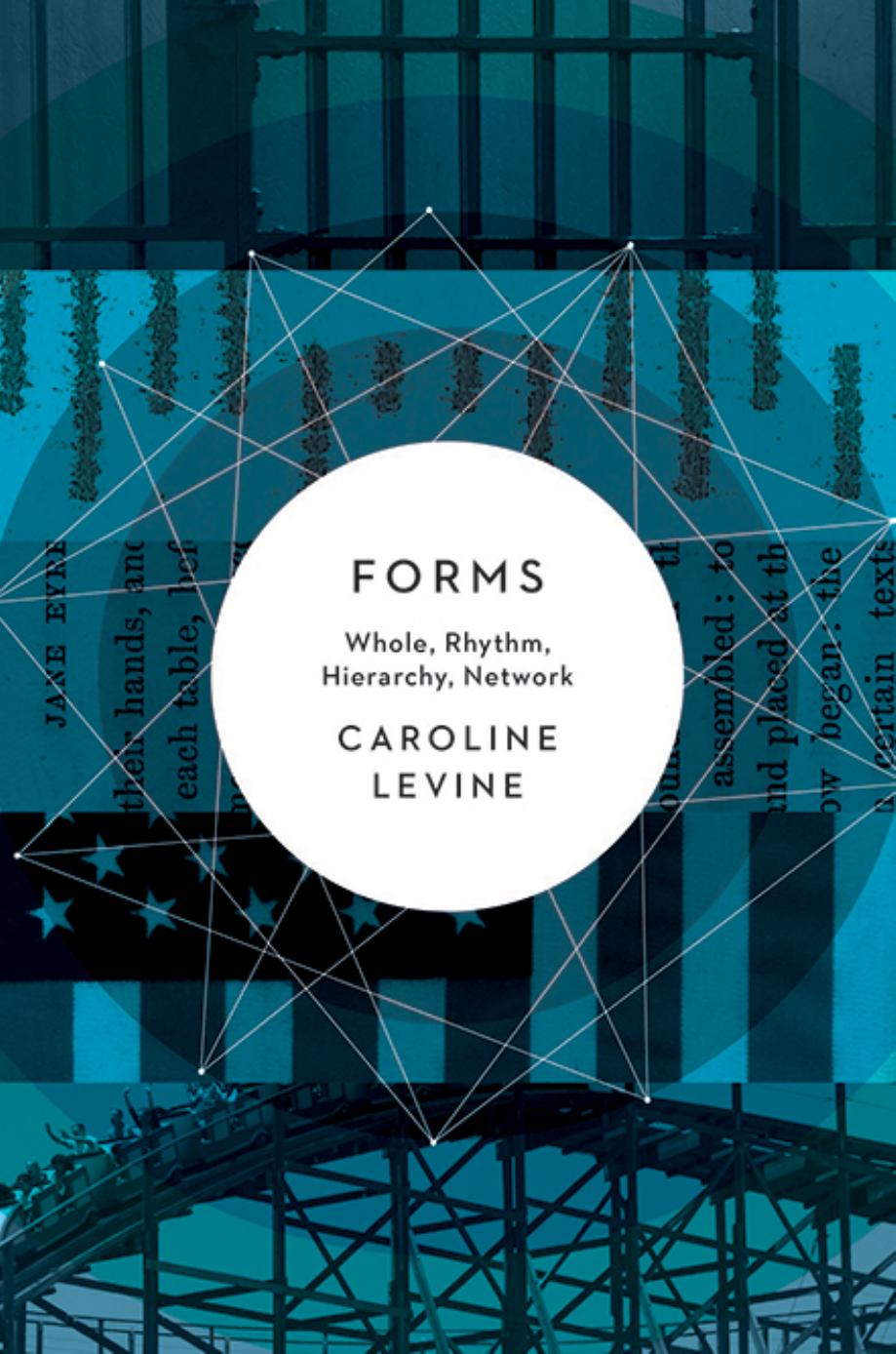
Author:Caroline Levine
Language: eng
Format: epub, pdf
Publisher: Princeton University Press
Published: 2014-07-24T16:00:00+00:00
Antigone
Written in fifth-century BCE Athens, Antigone has fascinated philosophers and political thinkers into our own time. Deliberately disobeying the formal edicts of the state in favor of ancient customs that honor family ties, Antigone herself has been taken to stand for a variety of values and positions, including a violent legal order that predates the state, the struggle between ethics and politics, mourning, femininity, monstrosity, civil disobedience, and the queering of kinship. Hegel, Schelling, Kierkegaard, Lacan, de Beauvoir, Irigaray, Derrida, Žižek, and Butler are among the many thinkers who have understood the drama as posing crucial questions about proper and improper relations among self, kin, and state. Hegel, most famously of all, argued that the play revolved around a collision between a nonpolitical, feminine devotion to a particular family and a masculine, universalizing commitment to the public good in the form of the state.9 Two principles, familial piety and citizenship, each vie for ascendency over the other.
And yet, to reduce the play to two principles does not quite do it justice. The king, Creon, insists on the superiority of masculinity and upholds the power of the state over kinship, enforcing the legal division between insiders and outsiders as he does so. Antigone, by contrast, sets her loyalty to ancient gods over state power, asserting her feminine right to disobey the state publicly in the name of a familial love that she argues should take precedence over the law. Both claim to hold the good of the people higher than their own private interests. In other words, Sophocles gives us not two but at least six major organizing principles: public and private, gods and humans, king and people, man and woman, obedience and disobedience, and friend and enemy. All of the characters understand these binaries as hierarchies, with one term in the pair higher than the other.
From the very beginning, both major and minor characters struggle to make choices in the face of these contending hierarchies. In the first scene, Antigone tells her sister Ismene that Creon, the new king of Thebes, has denied their brother Polyneices a customary burial, which, she says, dishonors the laws of the gods. When Antigone urges Ismene to help her bury Polyneices, to honor the sacred ties of kinship rather than the king’s unjust orders, her sister is horrified:
[T]hink how we will die, most miserably of all, if in defiance of the law we transgress the power of the king. We must remember that we were born women, not to fight against men…. I, at least, will beg those beneath the ground to forgive me, since I am coerced in this; I will obey those who are in power. 10
Ismene invokes two hierarchical binaries—king and subjects, and men and women. Antigone insists that a third—gods and humans—trumps the other two: “I will please those below longer than those here, for there I will lie forever” (7). While Antigone puts her love for her brother and the eternal power of the gods above the earthly power
Download
Forms: Whole, Rhythm, Hierarchy, Network by Caroline Levine.pdf
This site does not store any files on its server. We only index and link to content provided by other sites. Please contact the content providers to delete copyright contents if any and email us, we'll remove relevant links or contents immediately.
4 3 2 1: A Novel by Paul Auster(12352)
The handmaid's tale by Margaret Atwood(7726)
Giovanni's Room by James Baldwin(7297)
Asking the Right Questions: A Guide to Critical Thinking by M. Neil Browne & Stuart M. Keeley(5734)
Big Magic: Creative Living Beyond Fear by Elizabeth Gilbert(5721)
Ego Is the Enemy by Ryan Holiday(5386)
The Body: A Guide for Occupants by Bill Bryson(5064)
On Writing A Memoir of the Craft by Stephen King(4909)
Ken Follett - World without end by Ken Follett(4701)
Adulting by Kelly Williams Brown(4549)
Bluets by Maggie Nelson(4533)
Eat That Frog! by Brian Tracy(4497)
Guilty Pleasures by Laurell K Hamilton(4417)
The Poetry of Pablo Neruda by Pablo Neruda(4077)
Alive: The Story of the Andes Survivors by Piers Paul Read(4009)
White Noise - A Novel by Don DeLillo(3987)
Fingerprints of the Gods by Graham Hancock(3974)
The Book of Joy by Dalai Lama(3958)
The Bookshop by Penelope Fitzgerald(3826)
